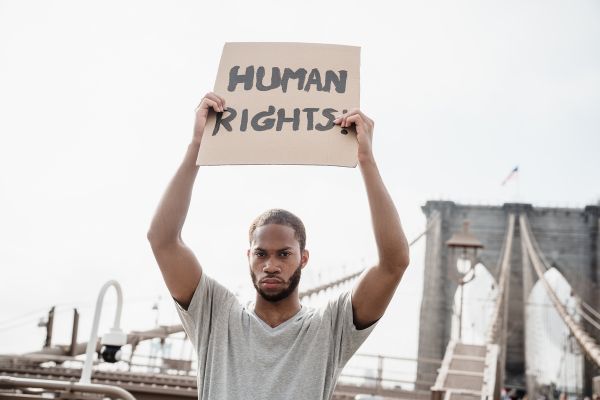
Understanding the Universal Declaration of Human Rights
The Universal Declaration of Human Rights is one of the most important documents in modern international law. It is often mentioned in discussions about freedom, dignity, justice, equality, and the basic rights every person should have simply because they are human. Yet for many people, it can feel like a distant legal document, something discussed by governments, courts, or international organizations rather than ordinary people.
In reality, the Universal Declaration of Human Rights is deeply connected to everyday life. It speaks to the right to live without fear, to speak freely, to receive an education, to work in fair conditions, to practice a belief, to be treated equally before the law, and to live with dignity. These are not abstract ideas. They shape how societies understand fairness, how governments are judged, and how people around the world demand better treatment.
Adopted by the United Nations General Assembly in 1948, the declaration came after the devastation of World War II. The world had witnessed extreme cruelty, mass violence, discrimination, and the collapse of basic human values. In response, nations came together to set out a shared moral and legal vision: that every human being has rights that should be respected, protected, and recognized everywhere.
Why the Declaration Was Created
The Universal Declaration of Human Rights was born from a painful historical moment. After World War II, there was a strong global desire to prevent such horrors from happening again. The war had shown what can occur when governments have unchecked power and when certain groups of people are treated as less human than others.
Before this declaration, human rights were often seen as a matter for individual countries to handle on their own. What happened inside a nation’s borders was usually considered an internal issue. But after the atrocities of the war, this view became harder to defend. The international community began to understand that human dignity could not depend only on the laws or attitudes of one government.
The declaration was created to provide a common standard for all nations. It did not belong to one culture, one religion, or one political system. Instead, it tried to express values that could be recognized across different societies. Its message was simple but powerful: every person has inherent dignity, and that dignity must be protected.
The Meaning of Human Dignity
At the heart of the Universal Declaration of Human Rights is the idea of human dignity. This means that every person has value, regardless of nationality, race, gender, language, religion, social status, political opinion, or background. A person does not earn dignity through wealth, education, power, or social approval. It exists naturally.
This idea may sound obvious today, but historically it has often been ignored. Many societies have allowed slavery, discrimination, political repression, unequal treatment of women, religious persecution, and other forms of injustice. The declaration challenged these practices by placing human dignity above convenience, tradition, or state power.
Human dignity also gives meaning to many specific rights. The right to freedom from torture protects the body and mind from cruelty. The right to education supports personal development. The right to fair trial protects people from arbitrary punishment. The right to work recognizes the need for livelihood and self-respect. Each right is connected to the larger belief that people deserve to live as human beings, not as tools, subjects, or silent victims.
What Rights Are Included in the Declaration
The Universal Declaration of Human Rights contains a broad range of civil, political, economic, social, and cultural rights. This wide approach is one reason the document remains so influential. It does not only focus on freedom from government abuse. It also recognizes that people need education, work, rest, cultural life, and social security to live with dignity.
Civil and political rights include freedom of speech, freedom of religion, the right to privacy, the right to take part in government, and protection from arbitrary arrest. These rights are essential in societies where people should be able to think, speak, vote, believe, and organize without fear.
Economic and social rights are also central. The declaration recognizes the right to work, the right to fair wages, the right to rest and leisure, the right to an adequate standard of living, and the right to education. These rights remind us that freedom is incomplete when people are trapped by extreme poverty, illiteracy, hunger, or unsafe working conditions.
Cultural rights appear as well, including the right to participate in cultural life and enjoy the benefits of scientific progress. This reflects a broader understanding of humanity. People do not live by law and politics alone. Culture, creativity, knowledge, and community also matter.
The Declaration and International Law
The Universal Declaration of Human Rights is not a treaty in the same way that many international agreements are. When it was adopted, it was a declaration, meaning it expressed shared principles rather than creating direct legal obligations like a signed treaty. However, its influence on international law has been enormous.
Over time, many of its principles became the foundation for binding human rights treaties. Important agreements such as the International Covenant on Civil and Political Rights and the International Covenant on Economic, Social and Cultural Rights were strongly shaped by the declaration. Together, these documents form what is often called the International Bill of Human Rights.
The declaration has also influenced national constitutions, court decisions, laws, and human rights institutions around the world. Many countries have written its principles into their legal systems. Courts and international bodies often refer to it when interpreting rights and responsibilities. Even when it is not directly enforceable in a courtroom, it carries moral and legal weight.
This is one of the interesting things about international law. Some documents begin as statements of principle but become powerful over time because they are repeatedly accepted, quoted, taught, and used. The Universal Declaration of Human Rights is a strong example of this process.
Why the Declaration Still Matters Today
More than seven decades after its adoption, the Universal Declaration of Human Rights remains highly relevant. The world has changed in many ways, but the basic questions it addresses are still with us. How should governments treat their citizens? What protections should individuals have? What happens when law is used to silence, exclude, or punish unfairly? How can societies balance security with freedom?
Today, human rights debates appear in many areas of life. Digital privacy, migration, freedom of expression online, racial justice, gender equality, religious freedom, workers’ rights, and access to education all connect back to the principles found in the declaration. New technologies and global challenges may create new questions, but the core idea remains the same: people must not lose their dignity.
The declaration also gives people a language for justice. When individuals or communities experience abuse, discrimination, or oppression, they often use human rights language to explain what is wrong. It helps turn personal suffering into a recognized public issue. Instead of saying only, “This is unfair,” people can say, “This violates a basic human right.”
Common Misunderstandings About Human Rights
One common misunderstanding is that human rights are only about politics or courts. In truth, they affect ordinary life in quiet but important ways. A child going to school, a worker receiving fair treatment, a journalist reporting without fear, a patient being treated with dignity, and a voter participating in public life are all examples of human rights in practice.
Another misunderstanding is that rights only protect certain groups. The word “universal” in the Universal Declaration of Human Rights is important. It means these rights belong to everyone. They are not reserved for citizens of wealthy countries, people with certain beliefs, or those who agree with the government. Universality is what gives the declaration its moral force.
Some people also think human rights are unlimited. That is not quite true. Certain rights, such as freedom from torture, are absolute. Others may have limits in specific circumstances, especially when they affect the rights and safety of others. But any limitation must be lawful, necessary, and proportionate. Human rights law does not mean chaos or unlimited personal desire. It means power must be controlled, and restrictions must be justified.
The Challenge of Turning Principles Into Reality
The Universal Declaration of Human Rights is inspiring, but the world has never fully lived up to it. Many people still face violence, poverty, censorship, unfair trials, discrimination, forced displacement, and denial of education or healthcare. This gap between principle and reality is one of the biggest challenges in human rights work.
A declaration alone cannot stop injustice. It needs laws, institutions, public awareness, independent courts, honest leadership, free media, active civil society, and people willing to speak up. Human rights must be protected not only in international meetings but also in schools, workplaces, police stations, courts, hospitals, homes, and online spaces.
Still, the existence of the declaration matters. It creates a standard against which governments and societies can be measured. It gives activists, lawyers, teachers, journalists, and citizens a common reference point. Even when rights are violated, the declaration helps make those violations visible.
The Role of Individuals and Societies
Human rights are often discussed as duties of governments, and rightly so. Governments have the main responsibility to respect, protect, and fulfill human rights. But societies and individuals also play a role. Rights become stronger when people understand them and respect them in daily life.
This can begin in simple ways. Treating others with fairness, rejecting discrimination, supporting education, listening to different opinions, and recognizing the humanity of people outside one’s own community all reflect the spirit of the declaration. Human rights are not only legal rules. They are also habits of respect.
Education is especially important. When people know their rights, they are better able to defend themselves and others. When they understand the rights of others, they are less likely to support abuse or exclusion. A society that teaches human rights builds stronger foundations for peace and justice.
Conclusion
The Universal Declaration of Human Rights remains one of the most meaningful achievements in international law. It was written after a period of deep human suffering, but its message continues to look forward. It reminds the world that dignity is not a privilege, freedom is not a favor, and justice should not depend on power or status.
Its strength lies not only in its words but in the standard it sets. It asks governments to respect people, societies to reject cruelty and discrimination, and individuals to see one another as fully human. The declaration has not solved every injustice, and perhaps no document could. But it has shaped the way the world speaks about rights, responsibility, and human worth.
In a time when new conflicts, technologies, and inequalities continue to test the meaning of justice, the Universal Declaration of Human Rights still offers a clear starting point. Every person matters. Every person has dignity. And every society is judged, in the end, by how seriously it takes that truth.