A drunk driving arrest can feel as though the outcome has already been decided, but an arrest is only the beginning. DUI charges explained clearly come down to two questions: what the government must prove and what consequences may follow after a conviction. The answers depend on state law, the driver’s record, test results.
Across the United States, the offense may be called DUI, DWI, OUI, or OWI. The labels differ, but they generally cover operating or controlling a vehicle while impaired by alcohol, drugs, or both. Some states use more than one term for different levels of impairment, so dwi charges in one state may not match the classification used elsewhere.
What Prosecutors Usually Have to Prove
Most states allow a case to proceed under one or both of two theories. The first is impairment: the prosecution argues that alcohol or drugs reduced the driver’s ability to operate safely. Evidence may include driving behavior, speech, balance, field sobriety exercises, witness observations, and police video.
The second is a “per se” violation based on blood alcohol concentration, or BAC. For most adult noncommercial drivers, the limit is 0.08 percent in 49 states and the District of Columbia; Utah uses 0.05 percent. Lower limits generally apply to drivers under 21 and commercial drivers. A person can still be charged below the standard limit when other evidence suggests impairment.
What Happens After a Drunk Driving Arrest
The stop and roadside investigation
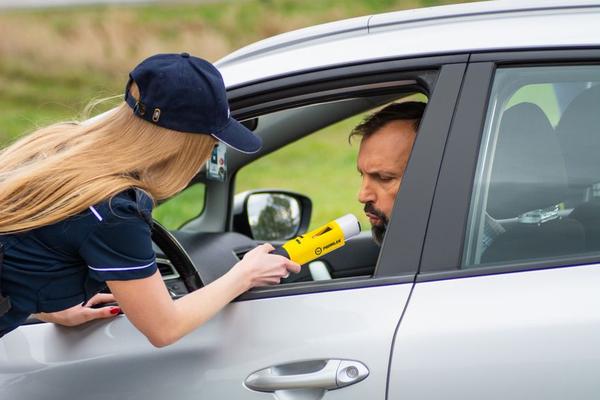
A case often begins with a traffic violation, unusual driving, a crash, or a sobriety checkpoint where permitted. The officer may ask questions, look for signs of impairment, and request field sobriety exercises or a roadside breath sample. These tools help determine whether probable cause exists for an arrest; they are not always the same as the evidential chemical test used later.
Arrest, testing, and booking
After an arrest, the driver may be asked to provide breath, blood, or urine under the state’s implied-consent law. Refusing can trigger separate license consequences, and in some jurisdictions the refusal may be used as evidence. Testing rules, warrant requirements, and refusal penalties vary, so refusal does not automatically prevent a case.
The person may then be booked and released on bond. Conditions can include avoiding alcohol, using a monitoring device, or not driving without permission.
The license case and criminal case
Two legal tracks may run at once. A motor vehicle agency can impose an administrative suspension based on a failed or refused test, while a criminal court separately decides guilt and punishment. The deadline to challenge a license suspension can be much shorter than the criminal case timeline.
In court, the defendant normally appears for an arraignment, receives the formal charge, and enters a plea. The defense can request reports, videos, test records, calibration information, and witness material. Motions may challenge the stop, arrest, search, or chemical-test evidence. Cases can end through dismissal, reduction, a negotiated plea, or trial.
Typical DUI Penalties
DUI penalties are set by state law and usually become more serious with prior convictions, a high BAC, a crash, injury, a child passenger, test refusal, or driving on a suspended license. A first offense is often a misdemeanor, but aggravating circumstances or repeated offenses can create felony exposure.
Possible consequences include jail, probation, fines, court costs, license suspension or revocation, alcohol or drug education, treatment assessments, community service, vehicle impoundment, and an ignition interlock. An interlock requires a breath sample before the vehicle starts. Courts may also order restitution when a crash causes financial loss.
The indirect costs may last longer than the sentence. Insurance premiums can rise, and jobs involving driving may become difficult to keep.
Defenses That May Affect the Outcome
A defense is not simply a claim that the driver “felt fine.” It focuses on whether the government can prove every element with reliable, lawfully obtained evidence. Common issues include whether the officer had a valid reason for the stop, whether the arrest was supported by probable cause, and whether required procedures were followed.
Chemical testing can be disputed when equipment was not properly maintained, the operator lacked required certification, the sample was contaminated, or the chain of custody is incomplete. Blood draws may raise questions about timing, storage, laboratory methods, or warrants. Breath results may be affected by procedural errors, although their significance depends on the device and evidence.
Field sobriety performance can be influenced by uneven ground, poor lighting, footwear, injury, age, anxiety, or unclear instructions. Video may support the officer’s account, but it may also conflict with the written report. In drug-related cases, the prosecution may need to connect the presence of a substance with actual impairment.
A Practical Example
Consider a driver stopped at 11:30 p.m. who gives a breath sample of 0.08 percent at 12:20 a.m. The prosecution may say the result proves the driver was at or above the limit while driving. The defense may examine when the last drink was consumed, whether alcohol was still being absorbed, whether the required observation period occurred, and whether calibration records were current. None of those facts guarantees dismissal, but they show why a test result must be evaluated in context.
An actionable first step after release is to preserve evidence. Write down the route, timing, food and drinks consumed, medications, officer instructions, and witness names. Save receipts, messages, location history, and photographs that may establish timing or conditions. Check the notice for any license-hearing deadline and avoid discussing the case on social media.
Related Legal Topics
Useful internal reading opportunities include misdemeanor vs felony charges, what happens after an arrest, and criminal defense strategies. These topics explain how classification, court procedure, and evidence rules can shape a DUI case.
Frequently Asked Questions
Is a DUI automatically a felony?
No. Many first offenses are misdemeanors, but prior convictions, serious injury, death, or other aggravating facts can elevate the charge. The exact rule depends on the state.
Can someone be charged under 0.08 percent?
Yes. The standard BAC limit creates a per se offense, but prosecutors may also rely on evidence of actual impairment. Lower limits apply to certain drivers, and Utah’s general limit is 0.05 percent.
Does refusing a breath test prevent a conviction?
Not necessarily. Refusal can lead to administrative license penalties, and prosecutors may use observations, video, witness testimony, or other evidence. Police may also seek a warrant for a blood sample in some situations.
How long does a DUI case take?
A straightforward case may resolve in a few months, while cases involving motions, experts, injuries, or trial can take much longer. License deadlines may arrive within days even when the criminal case continues for months.
Understanding the Charge Before Making Decisions
A DUI charge can affect driving privileges, finances, employment, and freedom, but the result is not determined by the arrest alone. The prosecution must prove the case under the law of the state where it occurred, and the evidence can be tested for legality and reliability. Reviewing the paperwork, protecting deadlines, preserving evidence, and obtaining advice from a qualified local attorney can help a person make informed decisions.